
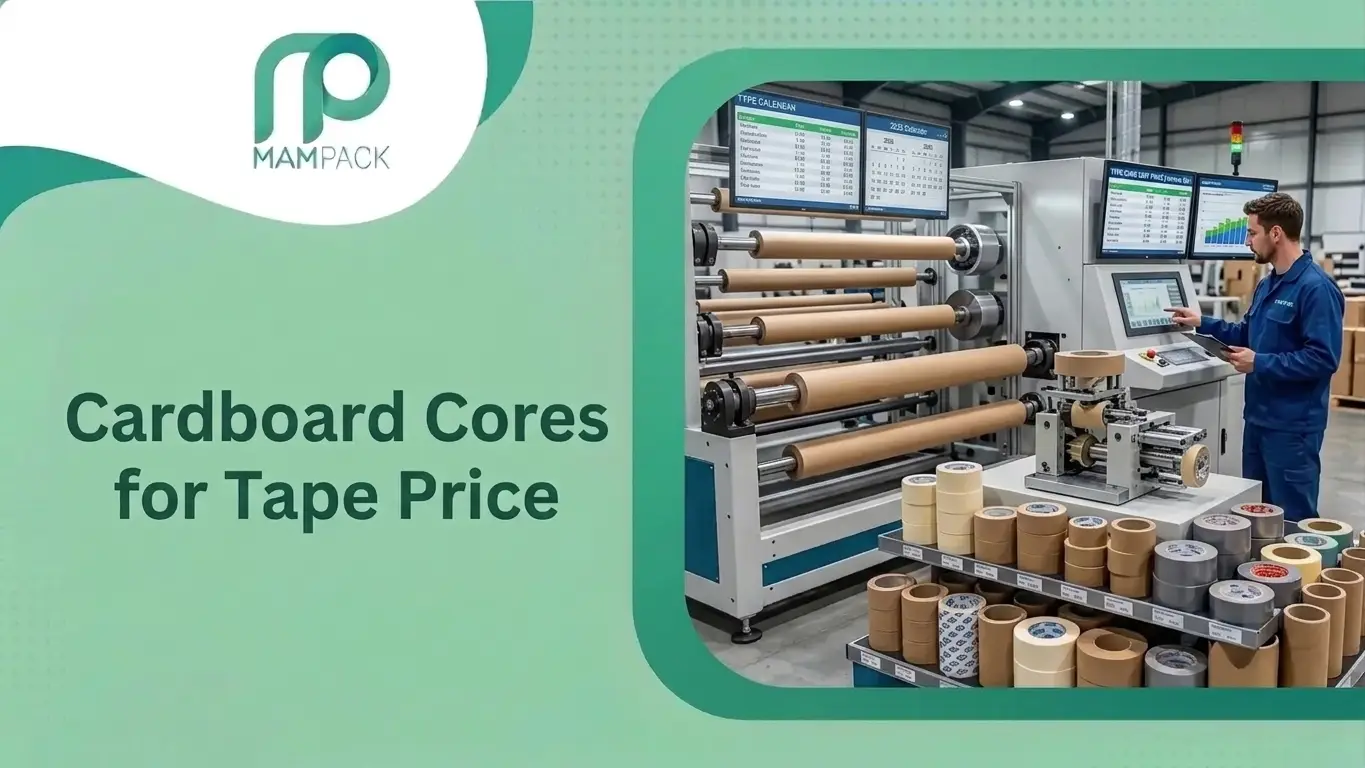
Cardboard cores for tape price look like the smallest part of the order, so they get the least attention. Then a batch runs slightly out of round and the slitter starts rejecting rolls. Small core, expensive morning. Here is what to check before you send the next PO. What is your line rejecting right now?
What Are Cardboard Cores for Tape price?
Every tape roll is wound on one. It carries the roll through slitting, packing, storage, and finally the customer’s dispenser, so it has to hold its shape through all four.
- Wound from layers of paper, glued and cut to your roll width.
- The inside diameter is what the machine chuck grips.
- Cut ends are exposed to the user, so the finish is part of the product.
- Small size, tight tolerance. That combination is the whole difficulty.
How Tape Cores Differ from Standard Packaging Cores
A film core and a tape core are not the same job. Most spec problems start with treating them like they are.
| Feature | Tape core | Standard packaging core |
| Size | Small diameter, narrow width | Larger diameter, wider |
| Tolerance | Very tight. The chuck has no forgiveness | Moderate, the shaft absorbs small variation |
| Cut edge | Visible to the end user, must be clean | Hidden inside the roll |
| Main stress | Radial crush from adhesive tension | Bending and roll weight |
| Batch consistency | Critical, thousands of pieces per run | Important, but variation is more tolerable |
That last row is the one that costs money. Cardboard cores for tape price are ordered in the tens of thousands, so a small drift between batches shows up as rejected rolls, not as a minor variation.
Common Tape Types That Use Cardboard Cores
Different tape, different pull on the core. Paper cores for tape rolls have to be matched to the adhesive, not just to the width.
- Packing tape (BOPP): high volume, high line speed. Consistency across the batch matters more than anything else here.
- PVC and electrical tape: narrower rolls, smaller cores, and the tightest tolerance in the group.
- Double-sided tape: heavier adhesive and more radial pressure on the core wall.
- Masking and paper tape: lighter tension, but the core still needs clean edges since the roll is handled directly.
Key Specifications to Look For in Tape Cores
Four numbers decide whether the run goes smooth. Everything else on the spec sheet is secondary.
Inner Diameter (ID) Accuracy and Tolerance
- The chuck grips the ID. A millimeter loose and the roll spins free during winding.
- Too tight and the operator fights every single core onto the shaft, which slows the whole line.
- Ask for the tolerance in writing, not just the nominal size.
- Measure your chuck yourself. Old drawings are wrong more often than people expect.
Wall Thickness and Ply Count
Tape core wall thickness is where most cheap cores get cheap. Fewer plies, thinner wall, lower price, shorter life.
- More plies means a stronger wall at the same inside diameter.
- The wall has to resist the adhesive pulling inward for the roll’s whole shelf life.
- Specify thickness in millimeters. “Strong” is not a specification.
- Thin walls also crush during palletizing, before the tape ever reaches a customer.
Radial Strength and Crush Resistance
Tape shrinks a little as it sits. That pull works against the core every day it is in storage.
- Weak core, and the roll deforms into an oval on the shelf.
- Ovality shows up as uneven dispensing at the customer, which comes back to you as a complaint.
- MAMPACK tests and follows up on quality during production rather than only at the end.
Clean, Burr-Free Cutting for Smooth Unwinding
- A rough cut edge catches the tape as it unwinds.
- Burrs also scratch the dispenser and annoy the person using it.
- Square ends keep the roll sitting straight in the carton.
- This is a finishing detail your customer sees, even if they never mention it.
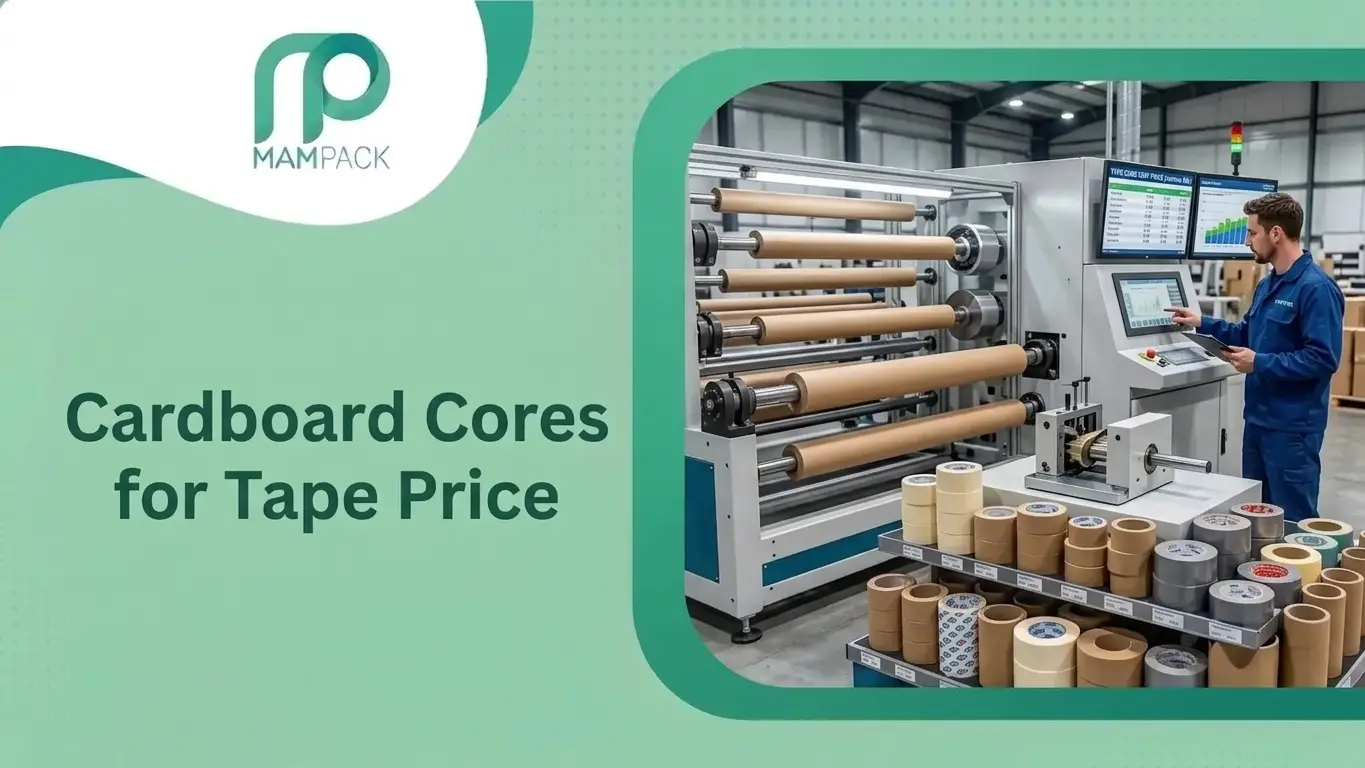
Standard vs Cardboard cores for tape price
Standard covers most tape lines. Custom is for when your machine or your product does not sit in the middle of the range.
Common Standard Diameters
MAMPACK produces standard cores from 2 inches up to 8 inches, and the small end of that range is where most tape work sits.
- 2 inch (50mm ID): the standard for packing tape, PVC, and most retail rolls.
- 3 inch: used for jumbo rolls and heavier industrial tape where roll weight is higher.
- Width is cut to your slitting setup, from narrow electrical tape up to full jumbo width.
When to Choose a Custom Tape Core
Custom tape core sizes make sense when the standard range is costing you time or scrap.
- Your winding equipment was modified or imported and no catalog size fits the chuck.
- You need a wall thickness the standard core does not offer for your adhesive.
- You want a non-standard width to cut waste at the slitter.
- Cores keep failing in storage and the spec needs to change, not the supplier’s reassurance.
How Core Quality Affects Tape Production
The core is inside the product, so its faults show up as tape faults. That is why quality complaints often trace back to a part nobody looked at.
Preventing Roll Warping and Tension Loss
- A core that goes soft in humidity lets the roll lose tension and slump.
- An oval core makes the roll wind unevenly, so tension varies across the width.
- Moisture control and proper drying before delivery keep the core stable through storage.
- Warped rolls do not get returned quietly. They get returned with a phone call.
Impact on High-Speed Dispensing Equipment
- Automatic dispensers and case sealers have almost no tolerance for a core out of round.
- Slight ID variation causes slipping, jamming, and stopped machines at the customer’s site.
- Consistent roundness matters more than raw strength on high-speed equipment.
- One bad core in a carton is enough for the customer to remember the brand.
Choosing Cardboard Cores from a reliable manufacturer ensures durable, precisely engineered paper cores tailored to packaging, printing, tapes, films, insulation, and other industrial applications.
Choosing the Right Tape Core Manufacturer
Everyone quotes a good first sample. The question is what batch number 40 looks like, three months later, in a hot warehouse.
Consistency Across Production Batches
- Ask where the paper comes from. MAMPACK uses imported paper from global suppliers, which is what keeps quality stable between runs.
- Ask what is tested during production, not after it.
- Ask for a trial batch on your real line before committing to volume. A technical tape core manufacturer will agree without arguing.
Custom Branding and Printing Options
- The core edge is visible whenever the roll is handled, so it carries your name whether you print it or not.
- Printed cores are worth discussing if you sell retail or want to discourage refills of your brand.
- Bring this up at the quote stage. It affects lead time and minimum quantity.
Lead Times and Minimum Order Quantities
Capacity is what decides whether you get supplied in a busy month.
- Founded in 2015 in Egypt, specialized in paper tubes and industrial paper cores.
- More than 100 employees, technicians, and workers behind every order.
- 1,000 tons per month production capacity, with expansion in progress.
- Fast response on large orders in short lead times, which is the part that matters when your own customer is waiting.
- Local production means no import delay and no six week wait for a container of cardboard.
How to Request a Custom Tape Core Quote
MAMPACK manufactures Cardboard Cores for Tape price to your line, with a trial batch before the full order. Request a Quote with your sizes, or Place Your Order if the spec is already confirmed.
If you want a quote that actually fits your machine, all you need to do is: Fill in your details on the MAMPACK website and send your inquiry through the contact form, or call the numbers listed on the site.
FAQs
What is a cardboard core used for in tape production?
It's the base the tape is wound on. The core carries the roll through slitting, storage, and the customer's dispenser, so it has to hold its shape at every stage.
What diameter do cardboard tape cores come in?
50mm (2 inch) is the standard for packing, PVC, and retail rolls. Heavier industrial and jumbo rolls usually move up to 3 inch.
Can tape cores be custom manufactured?
Yes. Custom tape core sizes are made to your chuck diameter, wall thickness, and width, which is the usual route for modified or imported winding equipment.
Why does wall thickness matter for tape cores?
Adhesive pulls inward as the roll sits. A thin wall gives way under that pull, so the roll goes oval on the shelf and dispenses unevenly.
What makes a tape core manufacturer reliable?
Consistency across batches, not a good first sample. Ask about the paper source, what gets tested during production, and whether they'll run a trial batch on your line.