
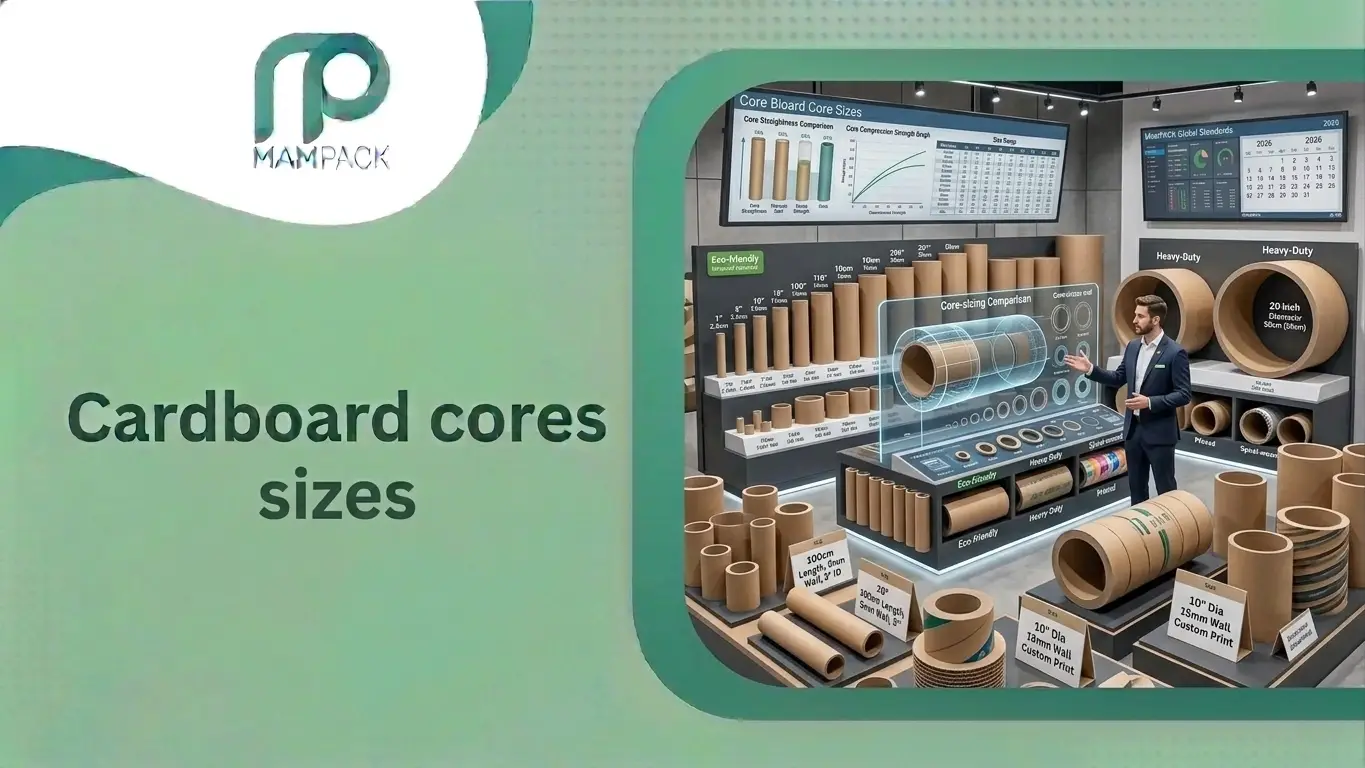
Cardboard cores sizes decide whether a roll runs clean or shakes the whole line. Most buyers order by habit, then discover the shaft is two millimeters off. Size is a machine decision, not a catalog choice. The hole, the wall, and the length all have to match the material you run. So do you know the exact numbers your line needs?.
What Determines a Cardboard Core’s Size?
Three numbers describe every core: the hole, the wall, and the length. Get one wrong and the other two stop mattering.
Inner Diameter (ID) vs Outer Diameter (OD)
Buyers mix these up more than any other spec, and it costs full orders:
- ID is the working number. It sits on the shaft or chuck, so this is what the machine cares about. A 2″ core has a 50mm internal diameter.
- OD is ID plus two walls. It grows when you ask for a thicker wall, which is why it changes even when the “size” stays the same.
- OD affects winding. The first layer of film or paper wraps around it, so a bigger OD changes how the roll builds.
- Tolerance belongs in the order. Loose and the core spins free. Tight and your operator fights it onto the shaft.
- Say which number you mean. When a drawing says only “76mm,” the supplier has to guess whether that cardboard core diameter is measured inside or outside.
Core Length and Wall Thickness Explained
Length is easy to state and easy to get wrong. Wall thickness is the part that actually carries your roll.
- Length follows the roll face, cut square at both ends. A crooked cut makes the roll sit at an angle.
- Core wall thickness is your strength number. Heavier rolls and higher tension need more wall, not a wider hole.
- A thicker wall on the same ID means a larger OD, so check machine clearance before you increase it.
- Ask in millimeters. “Heavy duty” is not a spec, and no two factories define it the same way.
- Straightness travels with length. The longer the core, the more anti-bow control matters.
Standard Cardboard cores sizes
MAMPACK produces standard core sizes from 2″ up to 8″. Here is what each one is normally used for, so you match the size to the job instead of copying an old purchase order.
2-Inch Cores: Common Uses
- 50mm internal diameter, the smallest in the standard range.
- Labels, tape, and narrow printed film.
- Light rolls where the machine head is small and tolerance is tight.
- One out-of-spec core stops a labeling head, so batch consistency matters more than wall strength.
3-Inch Cores: Common Uses
- 76mm ID, the most common size across packaging lines.
- Stretch film, aluminum foil, flexible packaging, and most textile rolls.
- Handles real winding tension while staying light enough for manual handling.
- Adjust the wall, not the hole, since most machines are already built around this cardboard core diameter.
6-Inch and 8-Inch Cores: Common Uses
- 152mm and 203mm ID, used where the roll gets heavy.
- Paper reels, artificial grass, wide printing substrates, and large flexible packaging rolls.
- Load sits across a long span, so a thin wall bows in the middle.
- Drying and anti-bow control decide whether these arrive usable.
For reliable packaging and industrial applications, choosing experienced Cardboard Core Manufacturers ensures durable, precisely engineered cores that deliver consistent performance and stability.
When Standard Cardboard Core Sizes Aren’t Enough
Standard sizes cover most lines, but not all of them. MAMPACK manufactures cores up to 450mm in diameter, a capability few producers in the region offer.
When Standard Sizes Aren’t Enough
- The roll is too heavy for a small core and the center starts to crush.
- The machine was modified or imported with a non-catalog shaft.
- Material is wound thick and short, so a wide core keeps the roll stable.
- You are replacing a metal or plastic core and need a paper equivalent at the same diameter.
Industries That Require Large Diameter Cores
- Artificial grass, where roll width and weight both push the limit.
- Paper mills, running long reels that cannot sag.
- Flexible packaging and printing, where wide-web machines use larger chucks.
- Textile, on heavy fabric rolls that would deform a narrow core.
No list of cardboard tube sizes includes these. They are made to drawing.
Businesses that require reliable solutions for heavy-duty industrial applications can benefit from Best Large Diameter Cardboard Core Manufacturer services designed for durability, strength, and consistent performance.ط
How to Choose the Right Core Size for Your Machine
You do not need a lab for this. You need the machine, a caliper, and five honest minutes.
Matching Core Size to Roll Weight and Material
The material decides more than the machine does. Two lines with the same shaft can need different Cardboard cores sizes once the roll weight changes.
| What you run | What to check first | Usual adjustment |
| Stretch film | Tension at speed | Tighter ID tolerance, stiffer wall |
| Aluminum foil | Light roll, tight tolerance | Standard wall, clean square edges |
| Artificial grass | Heavy, wide roll | Larger diameter, thicker wall |
| Paper reels | Long span, bow risk | Anti-bow control, longer length |
| Labels and tape | Machine rejects any deviation | Small ID, batch-to-batch consistency |
| Textile | Weight over long length | More core wall thickness, not a wider hole |
Measuring Your Existing Core Correctly
- Measure the ID from the inside, with a caliper, in millimeters. Old drawings drift over the years.
- Measure the wall separately, at two or three points around the core.
- Check the length at both ends and the middle to confirm the cut is square.
- Keep a failed sample. A core that bent or slipped tells a technical supplier more than a paragraph of description.
- Note the room. Humid areas change how paper behaves, and that changes the spec.
- Run a trial batch on the real line before committing to a full season.
Do this once and you stop comparing cardboard core sizes by guesswork every year.
Businesses looking for reliable thermal and protective packaging solutions can benefit from choosing the Best Insulation Cardboard Company for high-quality materials designed for durability and effective insulation.
Custom Sizes Made to Your Line
When the catalog does not fit, the core gets built around the machine. MAMPACK has manufactured paper tubes and industrial paper cores in Egypt since 2015, with over 100 employees and technicians behind each order.
When to Request a Custom Size
- Your shaft measurement falls between two standard core sizes.
- The roll weight is higher than the current core can carry.
- You are importing machinery with a non-local specification.
- Cores keep failing at the same point in the season, which usually points to the spec, not the supplier.
- You need one supplier covering several machines instead of buying cardboard tube sizes from four places.
What Information to Provide for a Custom Quote
- Inside diameter in millimeters, plus the tolerance you can accept.
- Core wall thickness, or the roll weight if you want it recommended.
- Length and quantity per delivery.
- The material you wind and the line speed.
- Room conditions, especially if the area is wet or humid.
- A photo of the machine head or the old core, which answers half the questions on its own.
High-quality Cardboard Cores for Tape provide the durability, dimensional stability, and smooth handling required for efficient tape manufacturing and packaging applications.
Getting the Numbers Right Before You Order
A paper core sizes chart is a starting point, not an order sheet. The right Cardboard cores sizes come from your shaft, your load, and your material, written in millimeters before anyone quotes a price.
Send MAMPACK your measurements and get a recommended spec with a trial batch. Request a Quote with your sizes, or Place Your Order if the spec is already confirmed.
FAQs
What are the standard cardboard core sizes?
MAMPACK produces standard sizes from 2
How do I measure a cardboard core's diameter?
Measure the inside diameter with a caliper, in millimeters, since that is the number the shaft works with.
What's the largest cardboard core diameter available?
Up to 450mm, made to your drawing.
Can cardboard cores be manufactured in custom sizes?
Yes. MAMPACK builds inside diameter, wall thickness, and length around your line instead of a catalog.
Does core wall thickness affect size selection?
Yes. A thicker wall keeps the same ID but increases the outside diameter, so check machine clearance first.